Planning flatbed hire in Redbridge
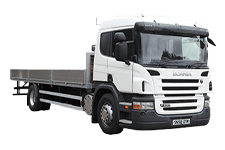
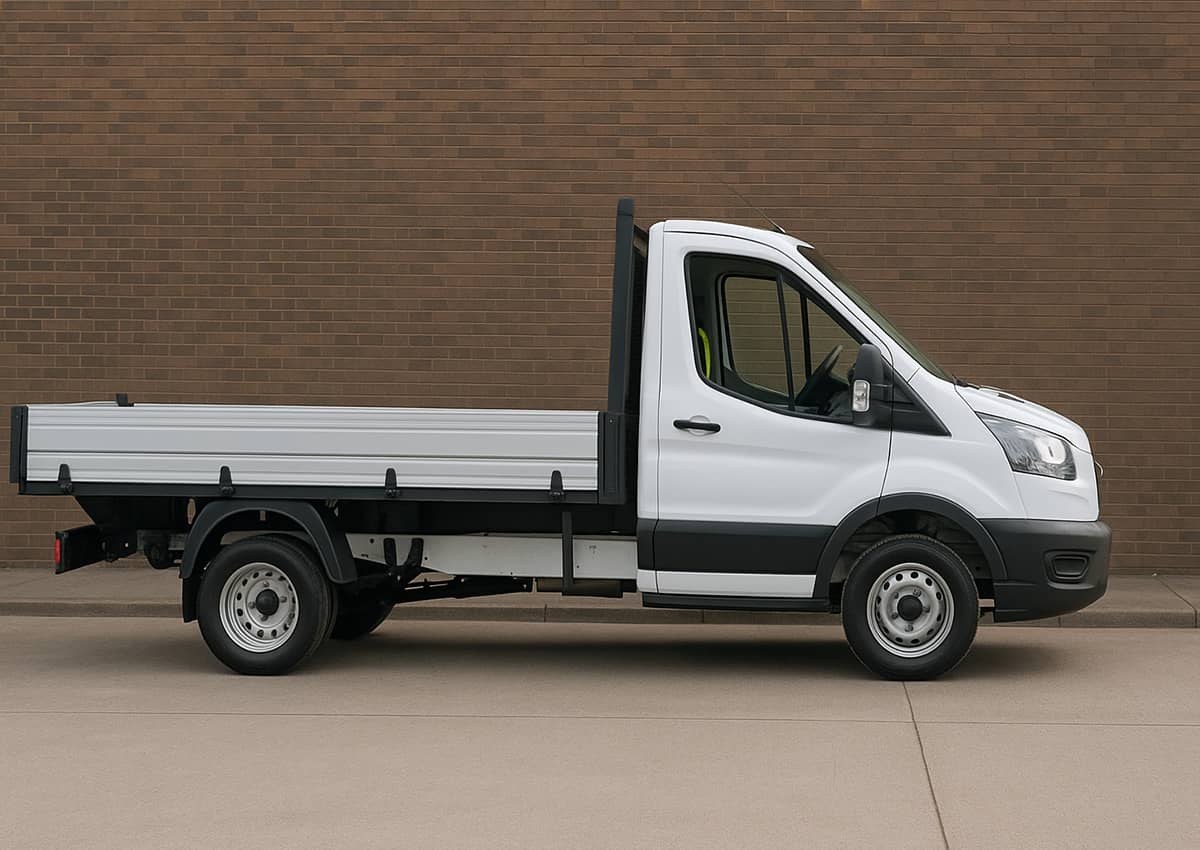
A dropside earns its keep when a load is too long, heavy or awkward for a van with a roof. In Redbridge the harder part is often not the drive but the last few metres: where the vehicle stands while fencing, pallets or a garden room kit come off the side. A marked bay sized for a car may leave no room for a vehicle that needs clear space along its flank.
This page is for householders, trades and businesses across the London Borough of Redbridge who hire and drive the vehicle themselves. It covers choosing a body size, licence weight versus payload, council parking arrangements for a delivery stop, and safe restraint and unloading. Specifications, availability and terms come from the supplier who confirms your booking, so treat every figure here as something to check.
Start with where the vehicle will stand
Before comparing bed lengths, walk the destination. Measure the kerb space outside the address, note any dropped kerbs you must not block, and read the lines and time plates on both sides of the road. A dropside with a side lowered needs working room beside it for people and the load, not just its own footprint, on ground that is as level and firm as possible.
Then decide how the load leaves the bed. Hand unloading, a pallet truck on a tail lift or a forklift at the destination each need a different surface and amount of space, and the arrangements should be agreed with whoever is receiving the goods. If the only lawful stopping place is some way from the door, a smaller body that can stop closer may beat a larger one parked further away.
Sources: HSE: safe loading and unloading
Single-yellow dispensations: narrow scope, set lead time
Where no bay is long enough, Redbridge Council can grant a dispensation letting a vehicle park temporarily on a single yellow line. It is not automatic and is not a general permit. Dispensations are not given on double yellow lines or where a loading ban is enforced, so read the markings and plates at the exact spot. If either applies, use an off-street space with the owner's agreement or a smaller vehicle making more trips.
Applications can take up to seven working days, so allow for weekends and bank holidays. Permission relates to a particular vehicle and place, so ask the supplier when the registration will be allocated and apply once it is confirmed. Do not fix a slot with a merchant or helpers until approval arrives.
Keeping a bay clear: suspensions, not cones
Where the best stopping place is a marked bay, clearing it requires a bay suspension approved by the council. Redbridge states that holding a parking space by blocking it off with cones or other objects is an offence, however tempting that is the evening before a delivery.
Apply through the council's suspension process well before the hire and check its current lead time and charges directly. On the day, if the space is occupied and nothing has been approved, do not double park or unload from the carriageway in a way that obstructs traffic. Move to a lawful alternative or rearrange the drop.
Sources: Redbridge Council: bay suspensions
Choosing a dropside category for the job
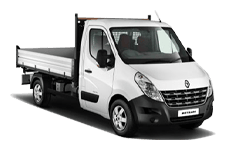
A 3 metre dropside suits fencing panels, boards, bagged materials and small plant, and is the easiest body to position on a residential street. A 4 metre dropside adds deck length for long timber or pipe, reducing overhang but needing a longer stopping place. Published bed lengths and payloads for these categories are representative, so confirm the allocated vehicle's figures.
A dropside with a tail lift is worth discussing when pallets or wheeled equipment must come down where there is no loading dock. The lift's rating is separate from vehicle payload; confirm both, plus platform size. A 7.5 tonne dropside lorry handles longer or multi-pallet loads but brings licence, route and space demands better suited to planned commercial work.
Sources: Nationwide Hire UK: 3 metre dropside, Nationwide Hire UK: 4 metre dropside, Nationwide Hire UK: dropside with tail lift, Nationwide Hire UK: 7.5 tonne dropside
Licence entitlement, gross weight and payload
Licence category depends on the vehicle's maximum authorised mass, also called gross vehicle weight, normally shown on its plate or sticker. A category B licence generally covers vehicles up to 3.5 tonnes; above that and up to 7.5 tonnes, C1 entitlement is needed. Check each named driver's current licence and ask about the supplier's age or experience conditions.
Gross weight is not what you can carry. Payload is roughly the margin between the plated maximum and the vehicle's own weight, and the driver, passengers, pallets, packaging and loose tools all use part of it alongside the goods. Add those together and compare the total with the allocated vehicle's confirmed payload. After a partial drop, redistribute what remains so no single axle is overloaded, and use a weighbridge if unsure.
Sources: GOV.UK: driving licence categories, GOV.UK: vehicle weights explained, DVSA: HGV overloading basics
Restraining the load and working at the side
Official guidance says loads must be safely loaded, secured for the journey and safely unloaded, and that weight or friction alone is not restraint. Inspect the deck, sides, headboard and anchorage points first, and ask what restraint the supplier provides and its ratings. Use rated straps on proper anchor points; rope and sheeting hooks are not restraint anchors. Matting and chocks support straps rather than replace them.
At the destination, check whether anything has shifted before lowering a side, because a leaning load can fall as soon as it loses support. Release straps one at a time, keep pedestrians clear of the pavement edge, and never let anyone stand beneath a moving tail lift.
Sources: DVSA: securing loads on HGVs and goods vehicles, DVSA: load securing basics, DVSA: ways to secure a load
Long loads and the route to the drop
Timber, pipe and scaffold tube often end up longer than the bed. Measure any projection beyond the rear or sides once the load is on, because the official guidance links marking, and in some cases advance notice, to how far a load sticks out. If the measurement is borderline, a longer body is usually simpler than extra marking and notification.
Plan the route as well as the stop. Residential roads lined with parked cars, tight junctions and low branches can make a long dropside awkward, so check the approach on a map and in person if you can. After the first mile, pull over somewhere safe and recheck straps, because loads often settle early in a journey.
Terms to confirm with your hire supplier
Terms differ between suppliers, and one company's published conditions say nothing about another's contract. Before booking, ask about deposit, insurance excess, mileage, fuel, permitted uses and commercial driving. Get collection and return times in writing, especially when a council dispensation or suspension is tied to a particular day.
Ask what emissions standard the allocated vehicle meets and check it yourself against current Transport for London guidance for your route. At collection, photograph the bed, sides and any lift, and report damage before loading.
For regular trade or commercial use, keep a simple record for each vehicle actually supplied: plated weight, confirmed payload, restraint kit issued and any damage noted at collection. It speeds up the next booking and helps settle questions at return.
Sources: Third-party reference: Nationwide Hire UK terms and conditions